Clean Energy GeorgiaThe Clay Ledger

Top story · Grid + storage

Georgia is banking the sun in yards of batteries from Lowndes to Wadley

The 2025 resource plan, approved in July, treats storage as cargo to be moved, not garnish: on the order of 3,000 megawatts of new batteries cleared to ship, 765 megawatts already under construction, and a clause in your bill that pays residential customers back if the growth behind the build does not show up.

Read the top story
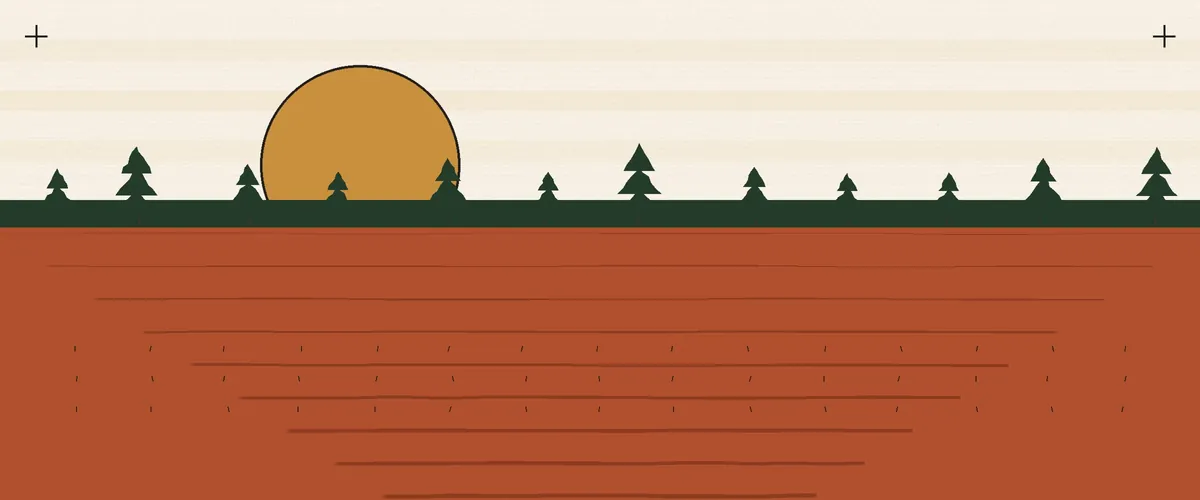
Cut-paper collage of a red-clay field where each furrow doubles as a solar panel row, a dark pine treeline on the horizon, and a single low ochre sun
Every furrow in a Georgia clay field is a row waiting for panels. The 2025 plan adds the batteries that keep those rows working after dark.
Dispatch

Stories

Filed this week

The 15-minute market next door turns four in November

Georgia has no regional grid operator. Instead, Georgia Power and its neighbors trade power in 15-minute windows through the Southeast Energy Exchange Market, running since November 9, 2022, with federal regulators still pressed to take a harder look.

Two reactors, one very large number

Plant Vogtle Units 3 and 4 entered commercial operation on July 31, 2023 and April 29, 2024, fifteen years after construction began. Together they add roughly 2,234 megawatts of carbon-free power; Georgia Power owns about 45.7 percent.

Your bill has a refund clause

The 2025 plan's settlement includes a promise with a number attached: if big new electric loads, chiefly data centers, do not put expected downward pressure on residential rates, credits on the order of $8.50 a month land on typical bills from 2029 through 2031.

Waybill

Where Things Stand

Figures as approved or filed

6,000+ MW

New renewable energy Georgia Power must bring online between 2029 and 2031, per the 2025 resource plan approved by the Public Service Commission on July 15, 2025. The ceiling rises to 8,500 MW if need is shown.

~3,000 MW

New battery storage approved in the same plan, spread across nine facilities. That is the largest single storage commitment Georgia has made, and it follows the 500 megawatt solicitation the Commission approved in 2022.

765 MW

Storage under construction today in Bibb, Lowndes, Floyd, and Cherokee counties. The 49.5 megawatt Moody facility near Valdosta was completed in July 2026; a 260 megawatt project at Wadley and a 200 megawatt project in Twiggs County are in the ground.

~9,900 MW

Total new resources Georgia Power asked the Commission to certify on July 31, 2025, including 1,886 megawatts of storage paired directly with solar. Certification is the step that lets costs flow into rates.

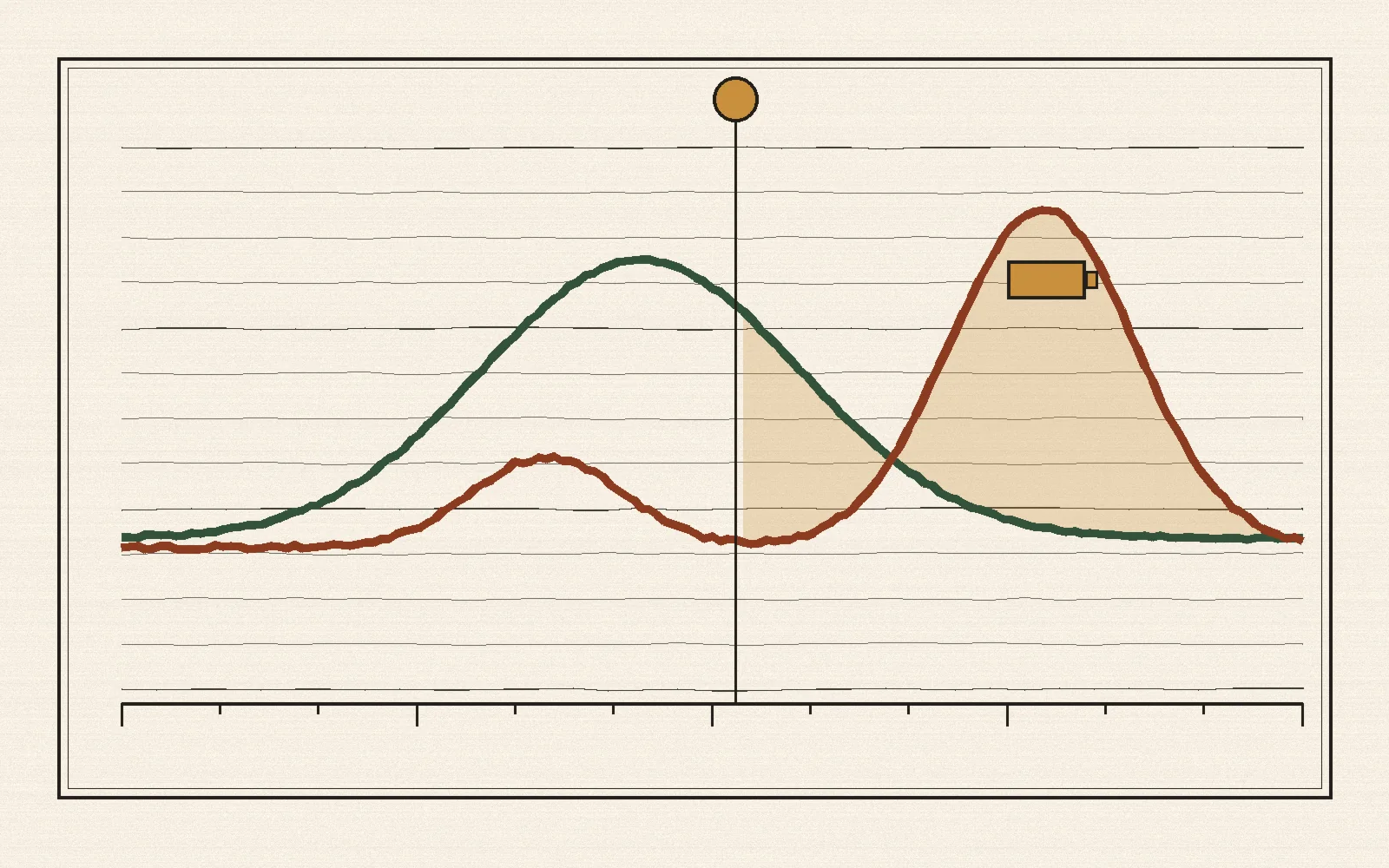
Hand-drawn style chart showing a green solar bell curve and a deep clay evening demand curve, with an ochre battery fill between them after sunset
Solar output peaks near midday and fades by dinner; Georgia demand peaks hours later. Storage is the space between the two curves, which is why the plan buys batteries ahead of need.

This week's long read

The battery yards of Georgia

From the first 500 megawatt solicitation to nine approved facilities and construction crews in four counties: how a state with no grid operator came to bet its evenings on shipping containers full of cells, and what the bet costs you.

Start reading
Cut-paper style panorama of a freight train of clay and pine colored cars crossing a red-clay field under a very large ochre sun
House rules

How We Work

We are a small publication about power in Georgia: the plants, the plans, the dockets, and the line on your bill that pays for all of it.

Georgia's grid is run by Georgia Power under contract with the state, not by a regional market operator. That makes the Public Service Commission's dockets the center of gravity for every story we cover, from Vogtle's reactors to the battery yards going up south of Valdosta. We read the filings so you can read the summary.

  • Rule 01

    We date everything. Resource plans, rate cases, and construction schedules move. Every figure here carries its filing date.

  • Rule 02

    We cite primary sources. Utility filings, Commission documents, grid-market records, and federal statistics. No secondhand summaries.

  • Rule 03

    We hedge the numbers. "Roughly" and "on the order of" are how honest utilities talk, so it is how we talk.

  • Rule 04

    We label illustrations. Charts that explain rather than measure are marked as illustrative, never as data.